Caribbean
Internet exchange links five Eastern Caribbean islands
AMS-IX says Sint Eustatius, Saba, Saint Martin, Saint Barthélemy and Saint Kitts are connected to a regional exchange. It has not published measured latency gains.
Five Eastern Caribbean islands are connected to a new regional Internet exchange, AMS-IX said on 7 October. Its announcement names Sint Eustatius, Saba, Saint Martin, Saint Barthélemy and Saint Kitts. AMS-IX, local operator EUTEL and the Saba Statia Cable System (SSCS) are involved. This is a regional infrastructure milestone; it does not mean that every provider on the islands already exchanges all of its traffic through the new facility. [1][2]
An Internet exchange lets participating networks hand traffic to one another at a common location rather than necessarily sending it over longer routes. This arrangement is known as interconnection or peering. In an island region, where subsea links shape the path data can take, a local or regional route may avoid a detour for certain destinations. The outcome depends on which networks participate, which routes they announce and how much traffic they exchange. An exchange alone does not guarantee a particular speed for each customer. [1]
AMS-IX says EUTEL supplies local infrastructure and SSCS provides inter-island connectivity. AMS-IX supplies the exchange platform, while Packet Clearing House contributes DNS infrastructure, according to the same announcement. These elements serve different purposes: the cable carries data, the exchange connects networks, and DNS helps resolve domain names. Together they may strengthen regional digital services. The sources reviewed, however, provide neither a resilience test nor a before-and-after account of traffic on the links. [1]
AMS-IX expects the exchange to reduce the need to route some data out of the region and potentially improve latency. That is a technical expectation, not a measured gain documented in its announcement. Developing Telecoms reported the development the following day, but its account draws on the same statement. It does not independently test connection performance or identify every operator already peering at the exchange. [1][2]
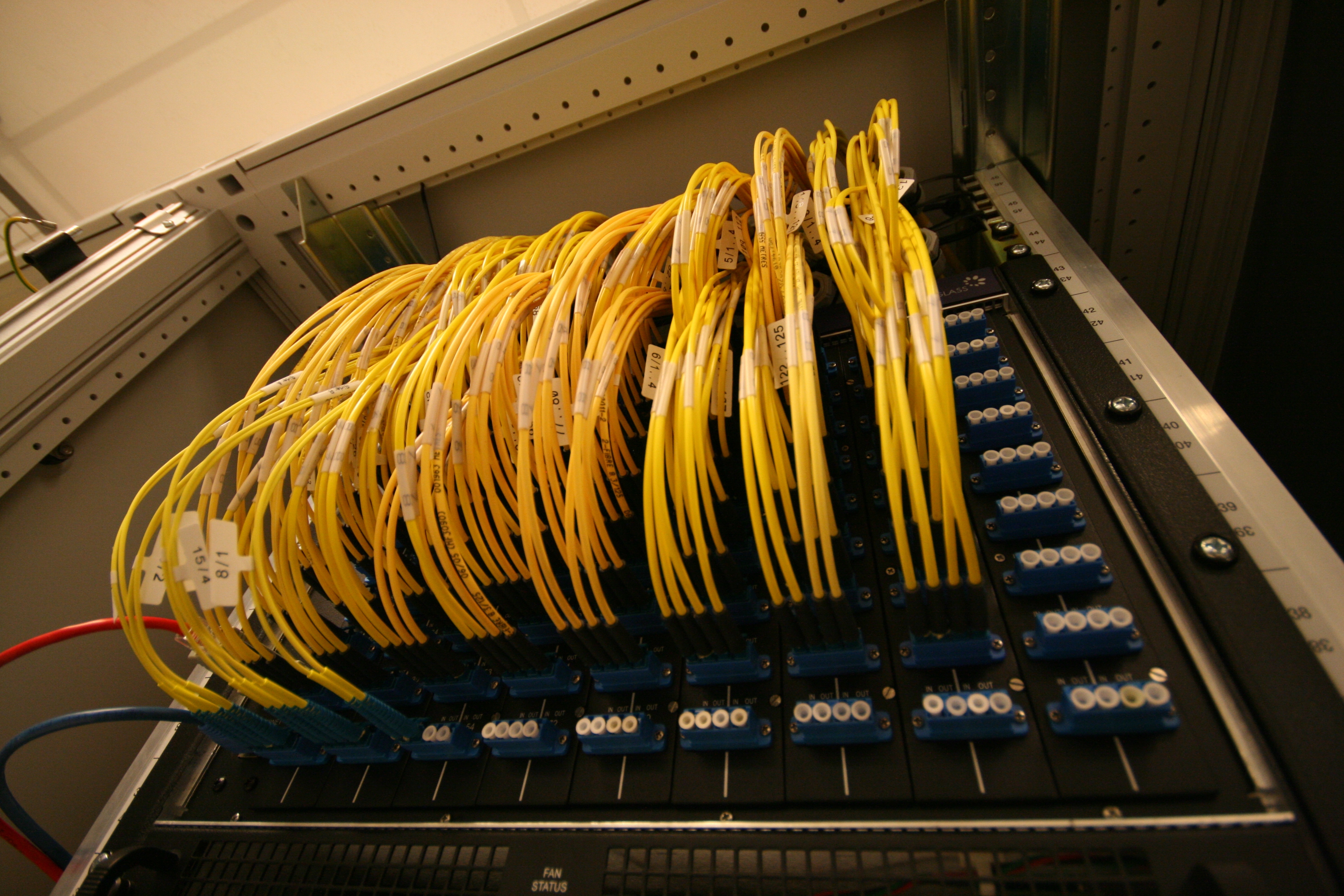
For the sector, the significant change is that five small territories now have a shared interconnection option. The next useful evidence will be the number of connected networks, the routes they exchange and comparable public measurements of latency and availability. Until then, the announced connection should be distinguished from possible effects on end users. The accompanying photograph shows AMS-IX equipment in Amsterdam in 2008. It is an archive image and does not depict the Caribbean facility. [1][2]
Sources
Explore with AI
External tools. Their answers are not editorial content verified by TelcoBrief and may contain errors.